Whether you are preparing a lot for new construction, clearing overgrown brush, or making room for a septic system, land clearing is often the first step. Understanding what drives the cost helps you budget accurately and avoid surprises. Here is what land clearing typically costs in Dutchess County, NY and what factors make each project different.
Average Land Clearing Costs Per Acre in Dutchess County
Land clearing costs in the Dutchess County area generally fall into these ranges:
- Light brush clearing (no trees): $1,500 to $3,000 per acre. This covers overgrown vegetation, tall grass, saplings under 4 inches in diameter, and light undergrowth.
- Medium clearing (scattered trees and brush): $3,000 to $6,000 per acre. Includes small to medium trees, thick brush, and some stump removal.
- Heavy clearing (dense woods): $5,000 to $10,000+ per acre. This is a full clear of mature trees, thick underbrush, stumps, and roots. Heavily wooded lots with large hardwoods on rocky terrain will be at the higher end.
For smaller residential projects (a quarter acre or less), costs are usually quoted as a flat project price rather than per-acre. A typical backyard clearing job in Hopewell Junction might run $2,000 to $5,000 depending on what needs to come out and how accessible the area is.
Factors That Affect Land Clearing Cost
No two clearing jobs are the same. Here are the main factors that move the price up or down:
Lot Size and Shape
Larger lots cost more in total but less per acre, since mobilization costs (getting equipment to the site) are spread across more area. Irregularly shaped lots or lots with tight access points take longer to work and may require smaller equipment.
Terrain and Slope
Dutchess County has its share of hilly, rocky terrain, especially in the eastern townships like Beekman, Pawling, and parts of East Fishkill. Steep slopes slow down equipment, increase fuel consumption, and require more careful planning to prevent erosion during and after clearing.
Tree Density and Size
A lot with 50 mature hardwood trees is a very different job than a lot with mostly saplings and brush. Large trees require felling, cutting, and either hauling off or chipping on site. Trees over 24 inches in diameter often need to be cut by hand before the excavator can move the debris.
Stump Removal
Removing stumps adds cost but is usually necessary if the cleared area will be graded for construction, a driveway, or a lawn. Stump grinding is faster and cheaper than full extraction, but full extraction (pulling the stump and root ball) is required when you need a completely clean subgrade, such as for a foundation or septic field.
Debris Disposal
What happens to the material after clearing significantly affects cost. Options include:
- On-site chipping: Trees and brush are fed through a chipper. The chips can be spread on site as mulch or hauled away. This is the most cost-effective option for most residential projects.
- Hauling off site: Debris is loaded into trucks and taken to a disposal facility or burn site. Adds trucking and dump fees to the project.
- Burning (where permitted): Some areas of Dutchess County allow open burning with a permit from the local fire department. This eliminates hauling costs but depends on local regulations and weather conditions.
Permits and Regulations
Dutchess County and its individual towns have regulations that can affect your clearing project. More on that below.
Types of Land Clearing
The type of clearing you need depends on what you are preparing the land for:
Selective Clearing
Only specific trees and vegetation are removed while desirable trees and natural features are preserved. This is common when homeowners want to open up a view, create a building envelope, or improve a property's usability without completely stripping it. Selective clearing requires more skill and planning since the crew needs to work around the trees you want to keep.
Full Clearing
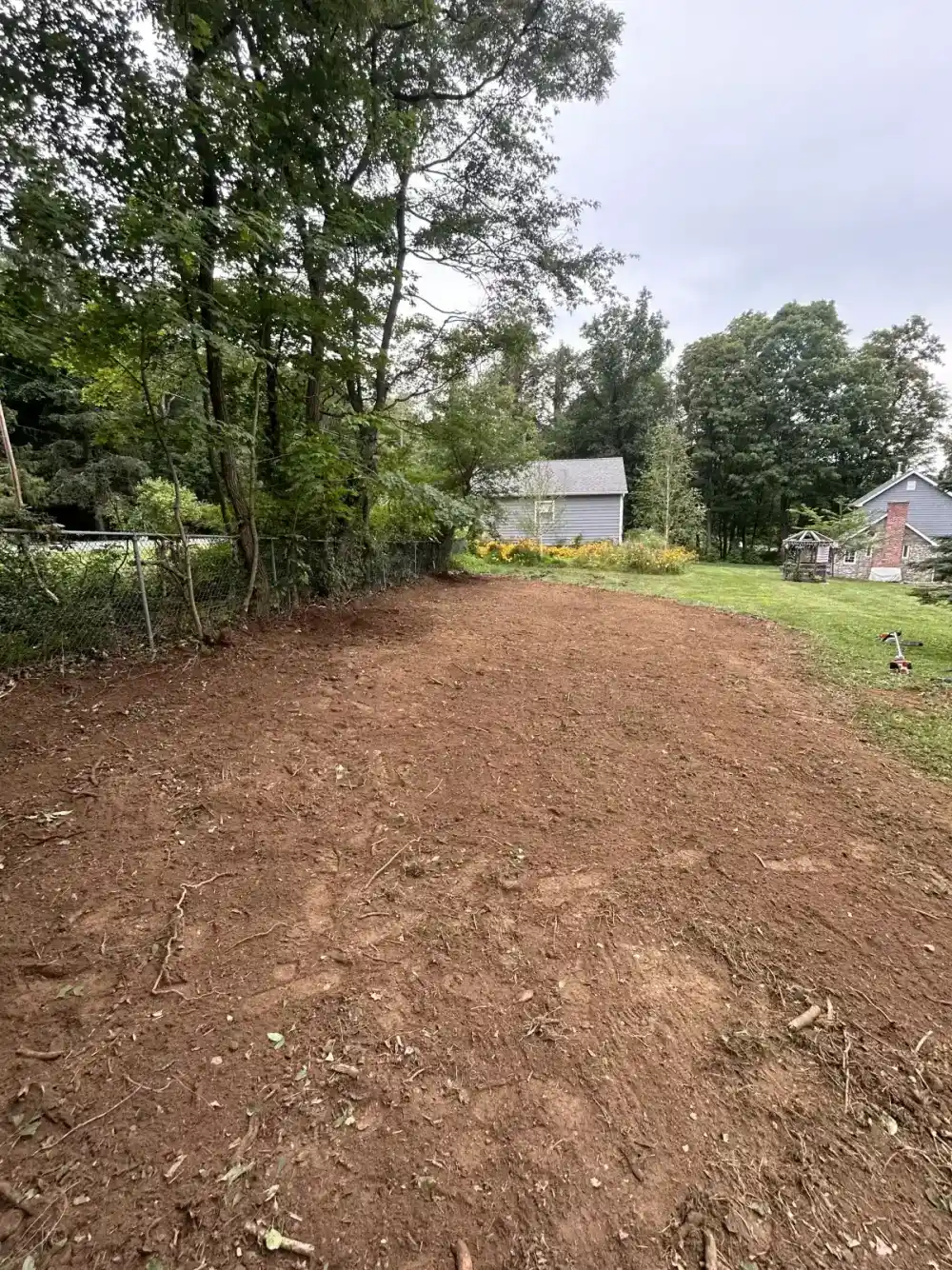
Everything comes out: trees, brush, stumps, and roots. The lot is stripped down to bare soil and ready for grading. Full clearing is typical for new home construction, large driveway installations, and commercial site preparation.
Brush and Undergrowth Clearing
Sometimes you do not need trees removed but the underbrush has taken over. Invasive species like multiflora rose, Japanese barberry, and bittersweet are a constant problem in Dutchess County. Brush clearing involves cutting and removing the undergrowth while leaving mature trees standing. This type of clearing is often done to reclaim usable yard space, improve sight lines, or reduce tick habitat.
Equipment We Use
The right equipment makes land clearing faster, safer, and more cost-effective. For most residential clearing jobs in Dutchess County, we use:
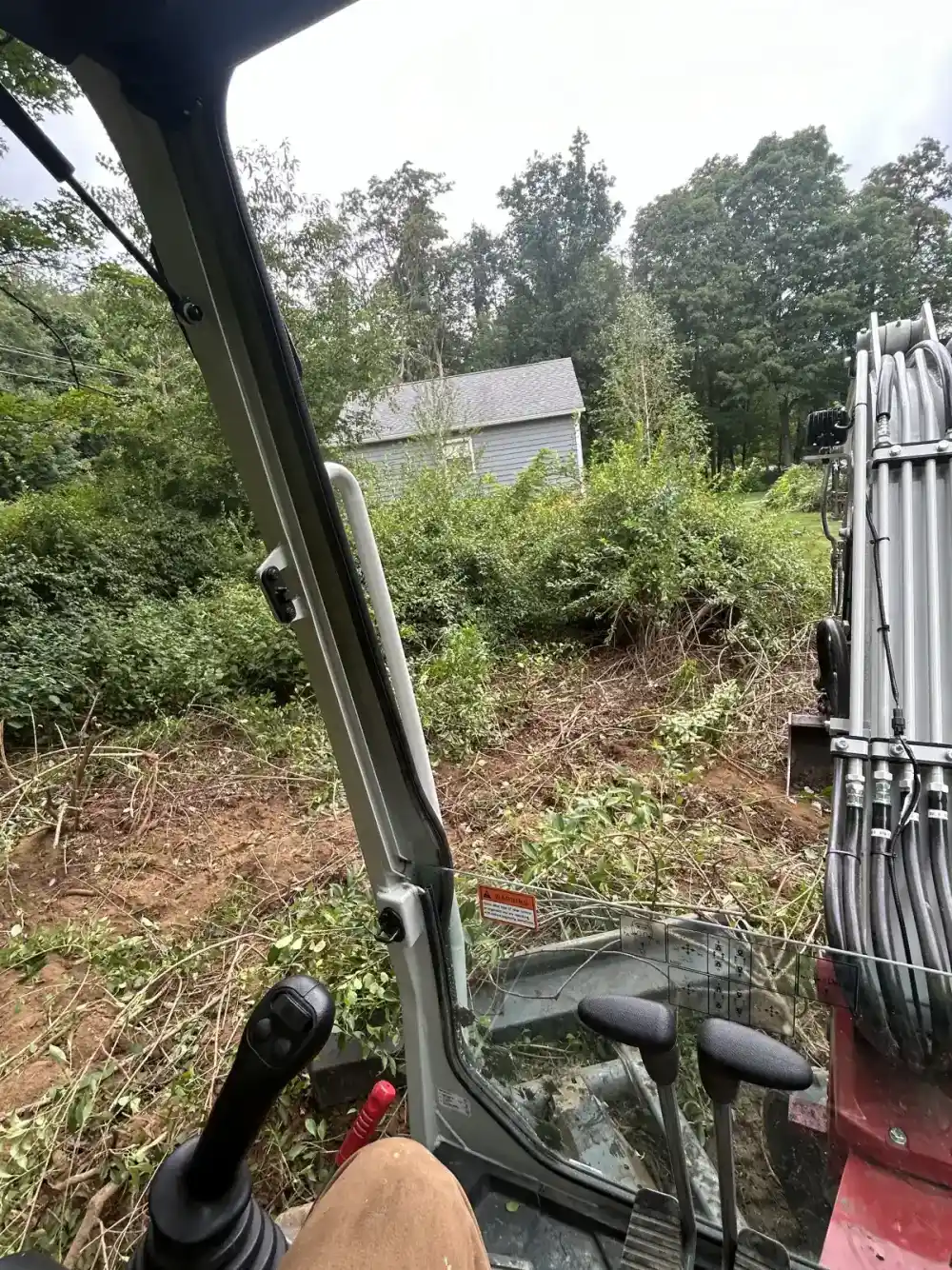
- Excavators: The workhorse of land clearing. Our excavators handle tree removal, stump extraction, grading, and loading debris. For tight residential lots, we use compact excavators that can work in spaces where full-size machines cannot fit.
- Brush cutters and forestry mulchers: These attachments mount to an excavator or skid steer and grind brush and small trees into mulch on the spot. Faster than cutting and hauling for undergrowth-heavy sites.
- Chippers: For processing cut trees and branches into wood chips on site.
- Chainsaws: Large trees are felled by hand with chainsaws before the excavator moves the logs and stumps.
Having the right mix of equipment is one reason professional clearing is so much faster than trying to tackle it with a chainsaw and a pickup truck. What might take a homeowner weeks to clear, a crew with an excavator and chipper can finish in one or two days.
Dutchess County Permits and Regulations
Land clearing in Dutchess County is subject to several regulations depending on your town and the scope of work:
- Tree removal permits: Some towns in Dutchess County, including the Town of East Fishkill and the Town of Fishkill, have tree removal ordinances that require a permit before removing a certain number of trees or trees over a specific diameter. Check with your local building department before starting.
- Wetland buffers: Properties near designated wetlands, streams, or floodplains may have restrictions on how close to the water you can clear. Dutchess County requires a minimum buffer zone around regulated wetlands.
- Stormwater management: Clearing more than one acre of land triggers New York State stormwater permit requirements (SWPPP). This applies mainly to larger commercial projects but can affect residential properties in certain circumstances.
- Septic and well setbacks: If you are clearing for a septic system or near a well, Dutchess County Department of Health regulations dictate minimum setback distances that affect where you can and cannot clear.
- Burn permits: Open burning of brush requires a permit from the local fire department and is only allowed during certain times of the year. The New York State DEC issues burn bans during high fire risk periods.
We handle the permit research as part of every land clearing project so you know exactly what is required before work begins.
When You Might Need Land Clearing
Homeowners and property owners in Dutchess County typically need land clearing for:
- New home construction: Creating a building envelope with clear access for construction equipment
- Septic system installation: Clearing the area for the tank, distribution box, and leach field
- Driveway installation: Clearing a path and preparing the subgrade for a gravel or paved driveway
- Property improvement: Opening up views, creating usable lawn space, or reclaiming overgrown areas
- Fire prevention: Creating defensible space around structures by removing brush and dead vegetation
- Sports fields and recreation: Leveling and clearing land for backyard sports courts, play areas, or practice fields
Grading and Regrading After Clearing
Once the land is cleared, the job is usually not finished. Most cleared land needs grading to create proper drainage, level the surface for its intended use, and prevent erosion. We often pair land clearing with excavation and grading services to deliver a finished, usable property in one mobilization.
Grading after clearing typically adds $1,000 to $3,000 for residential properties, depending on the area and how much earth needs to be moved. If you need topsoil brought in and seeded for a new lawn, that is an additional cost but something we handle as part of the same project.
How to Get an Accurate Estimate
The only way to get a reliable land clearing estimate is an on-site visit. We need to walk the property, assess the tree density, check the terrain, identify any access issues, and understand what you plan to do with the cleared land. Phone or email estimates for land clearing are unreliable because there are too many variables that only become clear when you see the property in person.
When we visit your property, here is what we evaluate:
- Total area to be cleared and boundaries
- Tree count and approximate sizes
- Terrain and slope conditions
- Equipment access points
- Disposal options (chip on site, haul off, burn)
- Whether grading is needed after clearing
- Permit requirements based on your town
From there, we provide a detailed written quote that breaks down exactly what is included. No surprises, no hidden fees.
Get a Free Land Clearing Estimate
Planning a clearing project in Dutchess County? Request a free estimate or call (845) 372-7768. We serve Hopewell Junction, Wappingers Falls, Fishkill, Beekman, East Fishkill, Poughkeepsie, LaGrange, and all of Dutchess County.