
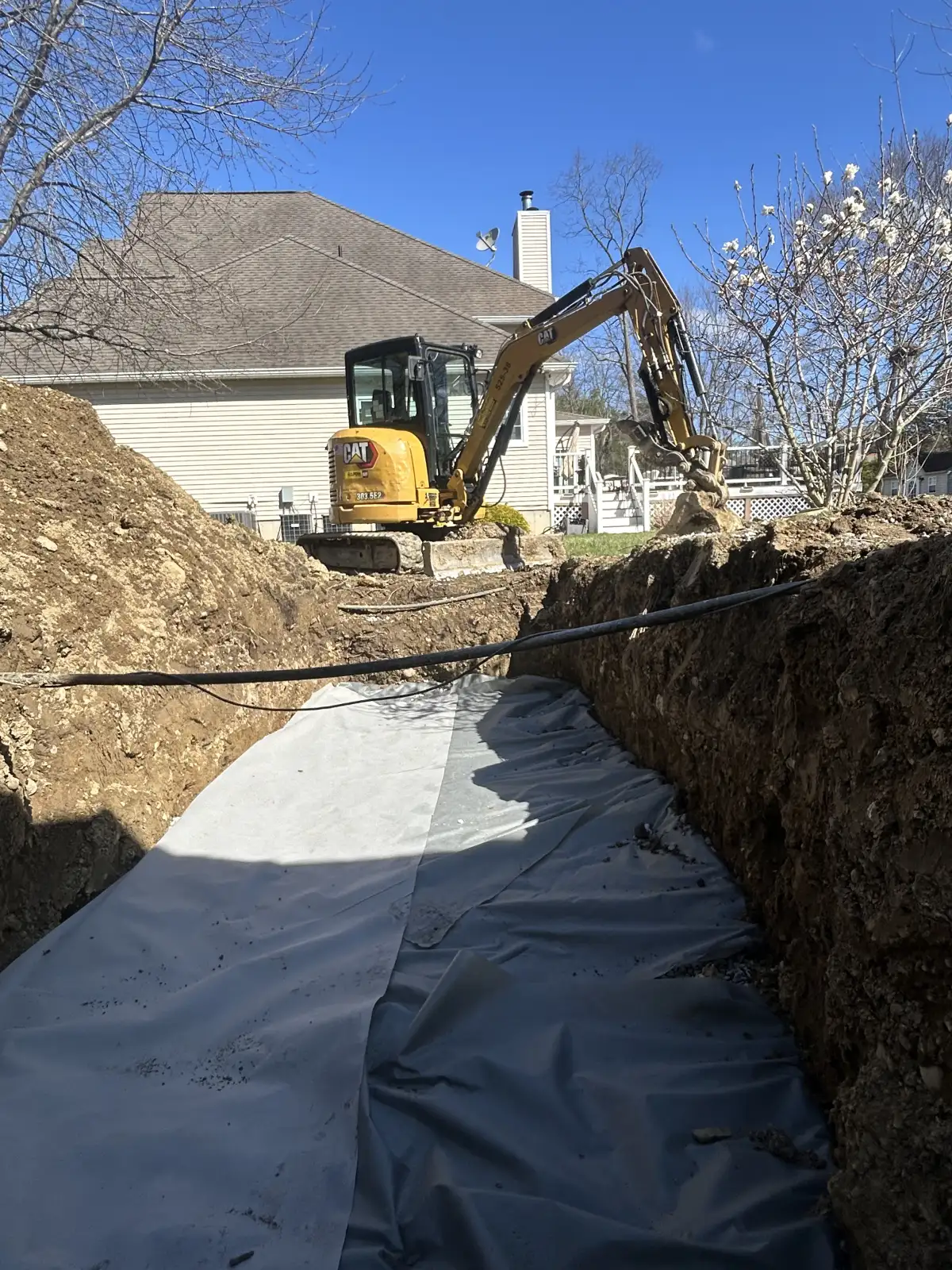
A French drain is one of the most reliable ways to move water away from your home and yard. If you have noticed pooling water, a soggy lawn, or moisture creeping into your basement, a French drain could be the fix you need. Here in Dutchess County, our unique soil conditions and terrain make drainage a priority for many homeowners, and a properly installed French drain is often the best long-term solution.
What Is a French Drain and How Does It Work?
A French drain is a gravel-filled trench that contains a perforated pipe. It works by collecting groundwater and surface water that seeps through the gravel, channeling it into the pipe, and directing it downhill to a safe discharge point away from your home. Gravity does most of the work, which is why the trench needs a consistent slope of about 1 inch per 8 feet of run.
The system is buried underground, so once installed it is completely hidden beneath your lawn or landscaping. The gravel acts as a filter, keeping soil and debris out of the pipe while allowing water to flow freely into it.
Signs You Need a French Drain
Not every drainage issue requires a French drain, but several common signs point to it being the right fix:
- Standing water in your yard after rain that takes more than 24 hours to drain
- A soggy or spongy lawn in certain areas, even during dry spells
- Basement moisture or dampness along foundation walls
- Water stains or efflorescence (white mineral deposits) on basement walls
- Erosion channels forming along the side of your house or across your yard
- Mold or mildew smell in your basement or crawl space
If you are dealing with any of these issues, your property likely has poor subsurface drainage. A French drain addresses the root cause by giving groundwater a clear path away from your home.
French Drain vs. Curtain Drain vs. Footing Drain
These three drain types get confused frequently, but they serve different purposes:
French drain: A versatile system that can be installed in a yard, along a driveway, or near a foundation. It intercepts and redirects groundwater that is moving through the soil. This is the most common residential drainage solution.
Curtain drain: A shallow variation of a French drain, typically installed uphill from the problem area to intercept water before it reaches your yard or foundation. Curtain drains are usually 18 to 24 inches deep and work best for surface water issues on sloped properties.
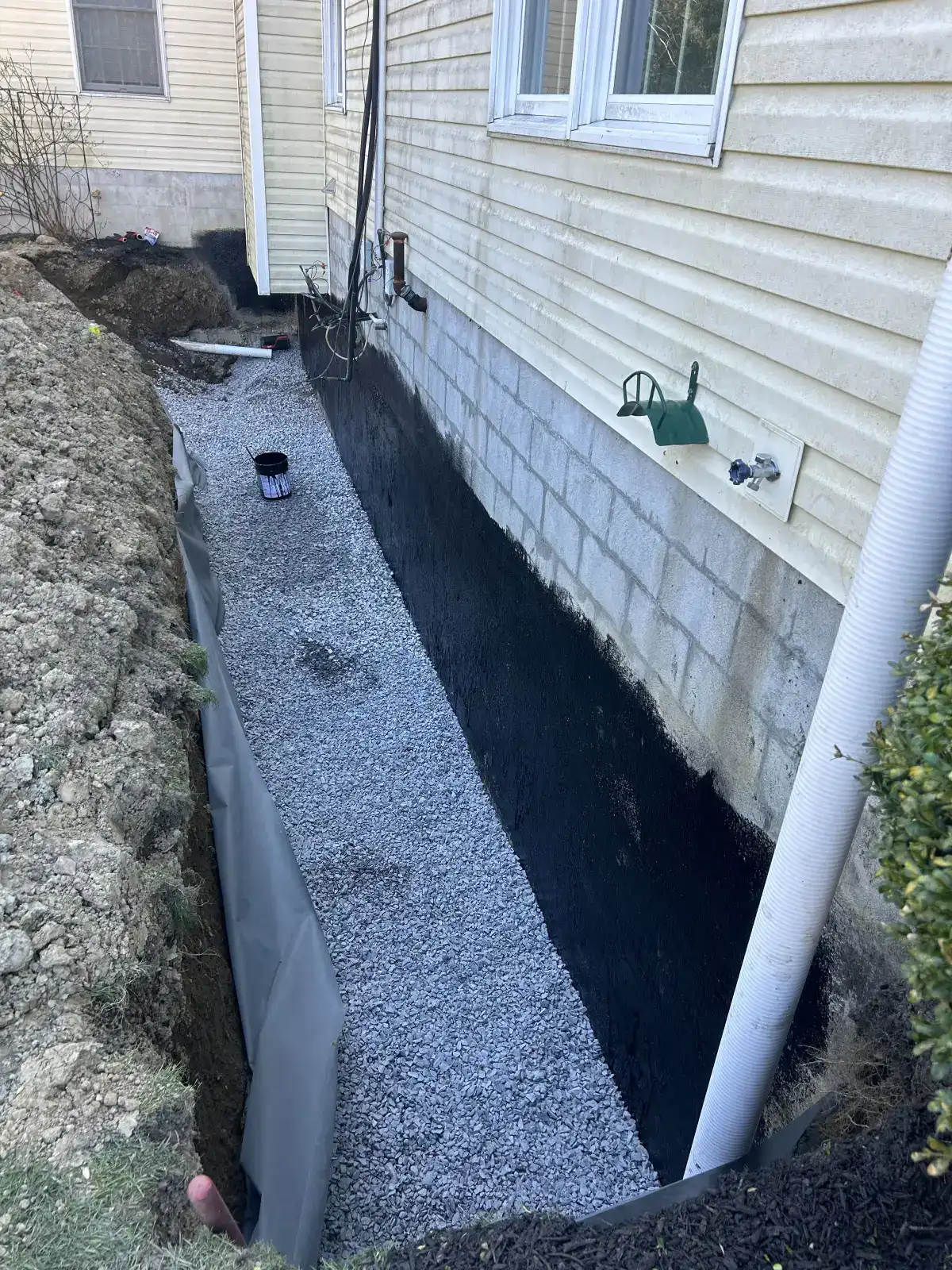
Footing drain: Installed at the base of your foundation during construction or as a retrofit. Footing drains sit right alongside the footer and collect water that would otherwise seep through foundation walls. If your basement leaks during heavy rain, a footing drain repair may be the answer.
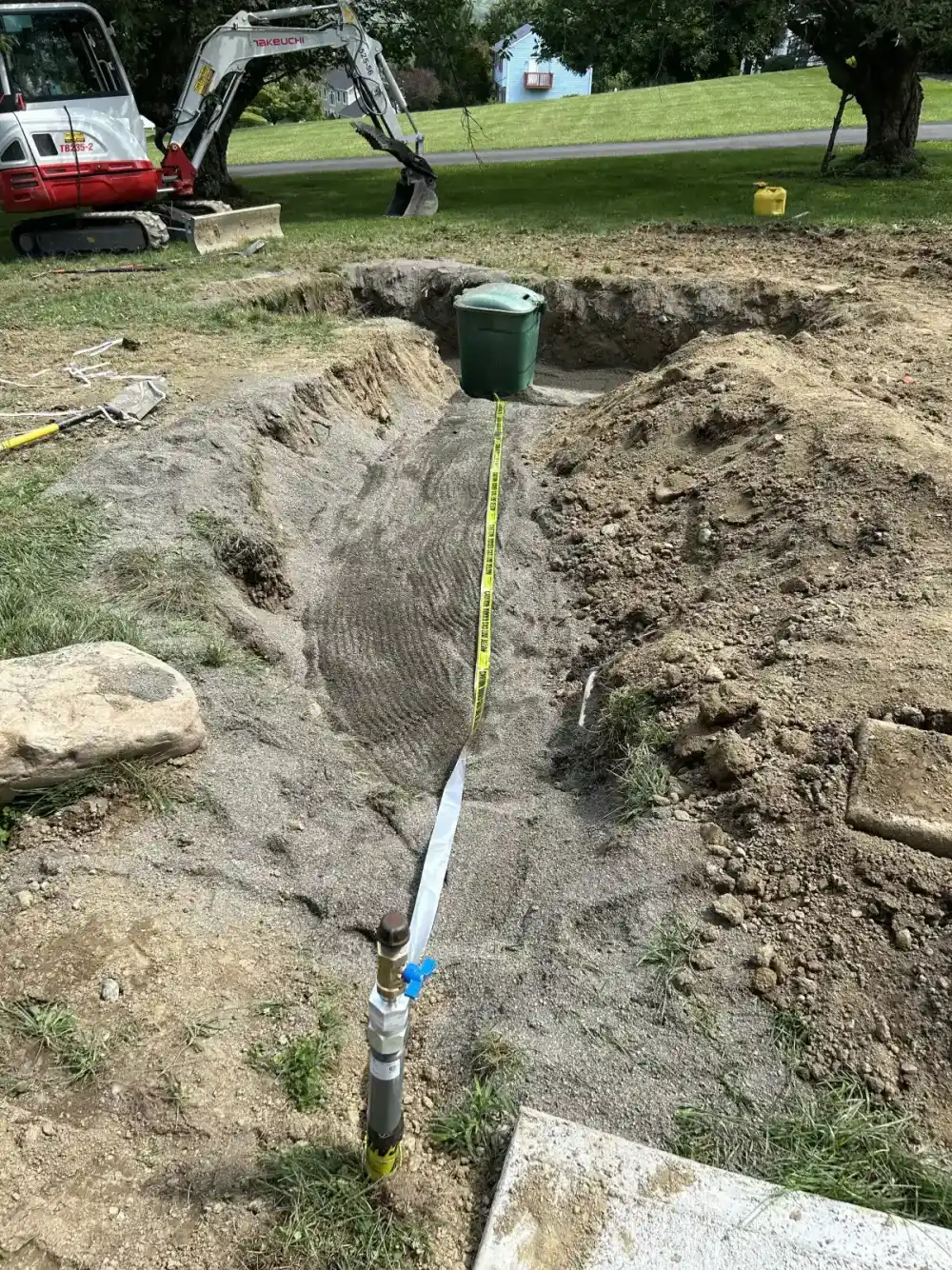
The Installation Process Step by Step
A professional French drain installation in Dutchess County typically follows these steps:
- Site assessment and grading plan. We evaluate where water collects, identify the best route for the drain, and determine the discharge point. Every property is different, and the layout needs to follow the natural grade of the land.
- Marking utilities. Before any digging begins, underground utilities including water, gas, electric, and cable lines are marked. In New York, calling 811 at least two business days before digging is required by law.
- Trenching. The trench is dug to a depth of 18 to 36 inches, depending on the severity of the drainage problem and the depth of the water table. Width is typically 12 to 18 inches.
- Lining with filter fabric. Landscape fabric lines the trench to prevent soil from clogging the gravel and pipe over time.
- Adding gravel base. A 2 to 3 inch layer of clean, washed gravel goes in first, providing a base for the pipe.
- Laying the perforated pipe. A 4-inch perforated PVC or corrugated pipe is placed on the gravel bed, with holes facing down. The pipe must maintain a consistent slope toward the discharge point.
- Backfilling with gravel. The pipe is covered with more gravel until the trench is nearly full.
- Covering and restoring. The filter fabric is folded over the top, and the trench is backfilled with topsoil and seed or sod to blend back in with your lawn.
Cost Factors for French Drain Installation in Dutchess County
The cost of a French drain in the Dutchess County area depends on several factors:
- Length of the drain: A typical residential French drain runs 25 to 100+ feet. Longer runs require more materials and labor.
- Depth of the trench: Deeper drains (for foundation-level water issues) cost more due to additional excavation.
- Soil conditions: Dutchess County is known for rocky clay soil, especially in areas like Hopewell Junction, Beekman, and East Fishkill. Hitting ledge rock or large boulders during excavation adds time and equipment costs.
- Accessibility: Tight spaces between homes, steep hillsides, or areas blocked by trees and structures affect how easily equipment can access the work zone.
- Discharge point: Connecting to a storm drain, dry well, or daylight outlet at the edge of your property each has different requirements and costs.
- Restoration: Replacing sod, mulch beds, or walkways that are disturbed during installation adds to the final price.
For most residential projects in Dutchess County, French drain installation typically ranges from $2,500 to $10,000 or more, depending on the scope. A 300-foot drain on a property with significant water issues will naturally cost more than a 40-foot run along a driveway.
How Long Does a French Drain Last?
A properly installed French drain should last 20 to 30 years or more. The key word is "properly." Poor installation, such as skipping the filter fabric, using the wrong gravel, or failing to maintain adequate slope, can lead to clogging and failure within just a few years.
The most common reason French drains fail is sediment infiltration. That is why quality filter fabric and clean, washed gravel are non-negotiable. Using rounded river rock instead of crushed stone also helps, since rounded stone creates better water flow channels.
DIY vs. Professional Installation
French drains are one of those projects where the concept sounds simple but the execution matters enormously. Here is what we typically see with DIY installations that fail:
- Insufficient slope, causing water to pool inside the pipe instead of draining
- Using the wrong type of gravel (pea gravel packs too tightly; dirty fill stone clogs the pipe)
- No filter fabric, leading to soil intrusion within 2 to 3 years
- Improper discharge that dumps water onto a neighbor's property or into a septic area
- Hitting a water line or utility because they skipped the 811 call
Professional installation with the right equipment, especially an excavator for trenching through rocky Dutchess County soil, gets the job done faster and ensures the drain actually works the way it should for decades.
Dutchess County Challenges: What Makes Our Area Different
Installing a French drain in Dutchess County is not the same as doing it in a sandy-soil region. Several local factors affect every drainage project here:
- Rocky clay soil: Much of Dutchess County, particularly the eastern half including Hopewell Junction, Beekman, and Pawling, sits on heavy clay soil with scattered rock formations. Clay does not absorb water well, which is why standing water is so common. But it also means trenching takes longer and often requires machine-powered digging.
- High water table in low-lying areas: Properties near the Sprout Creek, Fishkill Creek, and other waterways often deal with seasonally high water tables. In these zones, a French drain may need to be deeper or paired with a sump pump system to be effective.
- Frost depth: New York state building code requires a frost depth of 48 inches. While French drains do not need to be buried below the frost line in most cases, footing drains and any drain that connects to a foundation system should account for frost heave.
- Seasonal freeze-thaw cycles: Our winters bring repeated freezing and thawing, which can shift soil and affect drain alignment over time. Proper backfill compaction helps prevent settling.
Get a Free Drainage Assessment
Every property drains differently, and the only way to know exactly what you need is an on-site evaluation. We will walk your property, identify where water is collecting, and recommend the most cost-effective drainage solution, whether that is a French drain, curtain drain, dry well, or a combination approach.
Ready to solve your drainage problems? Request a free estimate or call us at (845) 372-7768. We serve Hopewell Junction, Wappingers Falls, Fishkill, Beekman, Poughkeepsie, and all of Dutchess County.